


MUTAGENENNY WPŁYW INFEKCJI FAGOWEJ
08 04 2026
Kategoria: Seminarium IM
Zapraszamy na seminarium instytutowe: w poniedziałek 13 kwietnia o godz. 14 w sali 102B mgr Mateusz Kunach z Zakładu Wirusologii Molekularnej wygłosi seminarium pt. “Phage infection of Pseudomonas aeruginosa leads to emergence of genotypically and phenotypically distinct mutants”.
Abstract :
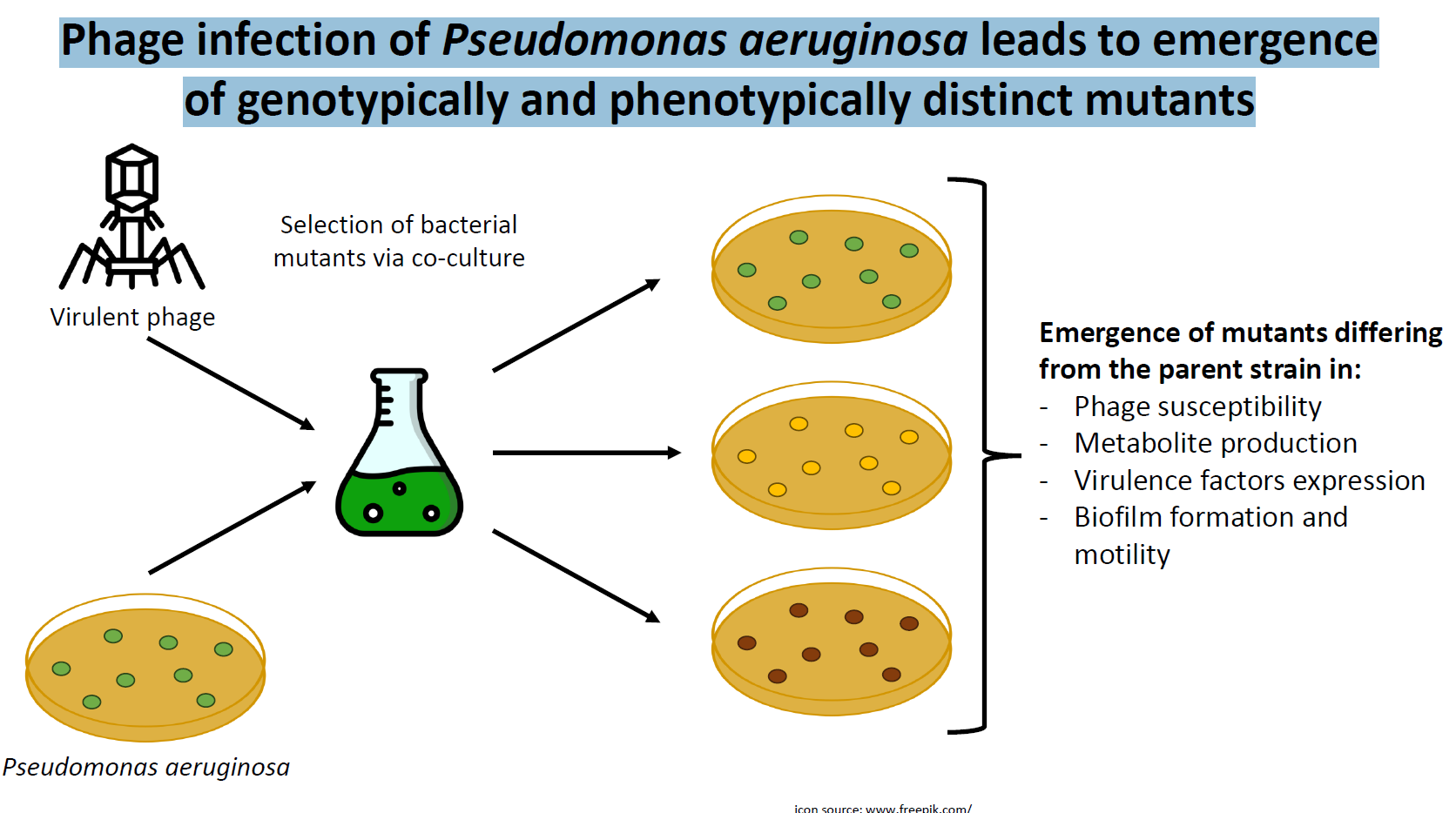
Pseudomonas aeruginosa’s infectivity stems from its use of multiple virulence factors, most distinctive being the biologically active pigments. Our work aims to describe the impact of phage infection on P. aeruginosa’s fitness and virulence profile at phenotypic and genotypic levels.
Following phage infection, we obtained several bacterial mutants and used two of them for further study. Their genomes were sequenced and analysed. Pigment secretion, motility, haemolysis, biofilm formation and phage-host interactions were assessed.
Phenotypic differences displayed by the mutants included increased pyomelanin and pyoverdine secretion, partial loss of motility, reduced biofilm formation and changed haemolysis patterns. Lower phage adsorption rates and emergence of cross-resistance were observed. Comparative genome analysis showed two muation types: a large chromosomal deletion (494 Kbp) or multiple point mutations.
Phage infection of P. aeruginosa may drive the selection of mutants displaying significant alterations in their genotype, expressed phenotype and phage-host interactions. Notably, observed phenotypic changes concerned virulence profiles and adaptive traits of the mutants. These findings highlight the evolutionary impact of phage therapy and underscore the need to consider potential trade-offs, including virulence modulation, when designing phage-based antimicrobial strategies.